
Agricultural Land to Residential Conversion in Tamil Nadu: Process and Costs
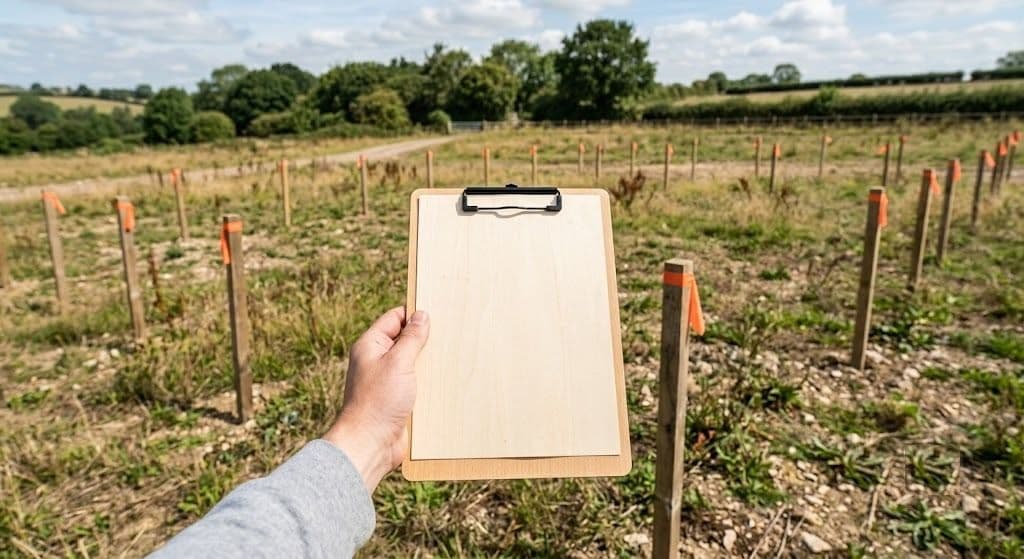
Land on the outskirts of Chennai is often cheaper partly because it's still classified as agricultural — but 'cheaper' only holds if you understand what it takes to legally convert and develop it, and price that into your decision from day one.
Why classification matters before you buy
Land use classification (agricultural vs. residential/non-agricultural) determines what you're legally allowed to do with it. Building a house directly on agricultural-classified land without conversion isn't just a technicality — it affects your ability to get approvals, utility connections, and a construction-ready patta.
The conversion process, broadly
Converting agricultural land to non-agricultural (residential) use in Tamil Nadu involves applying to the relevant revenue authority for a change in land use classification, along with the layout approval process (DTCP or CMDA, depending on jurisdiction) if you intend to develop it as a residential layout rather than a single plot. This typically requires the land to conform to zoning regulations for the area, and may involve conversion fees payable to the government.
Documents typically involved
- Current patta/chitta showing agricultural classification
- Application for land use conversion to the revenue department
- Layout plan (if developing as a residential layout, for DTCP/CMDA approval)
- Payment of applicable conversion fees
- Updated patta reflecting the new classification once approved
What to check before buying land that's still agricultural
If a seller is offering agricultural land specifically for residential use at an attractive price, ask directly: has conversion already been completed, or is it your responsibility as the buyer? A plot sold 'as agricultural land, buyer to convert' is a materially different — and more work-intensive — purchase than one already converted and DTCP/CMDA-approved as a residential layout.
The realistic trade-off
Already-converted, already-approved residential plots cost more per sq ft than raw agricultural land for a reason — that premium reflects the conversion and approval work already done. Buying unconverted land can make sense if you have the time, patience and local guidance to handle conversion yourself, but it should never be treated as a simple, faster version of the same purchase.
Frequently Asked Questions
Can I directly build a house on agricultural land in Tamil Nadu?
Not legally without first converting the land's classification to non-agricultural/residential use through the appropriate revenue and planning authority process.
Who is responsible for converting agricultural land — buyer or seller?
This depends entirely on what's agreed at the time of sale — always clarify explicitly whether conversion is already complete or will be the buyer's responsibility.
Does agricultural land near Chennai cost less because it's unconverted?
Generally yes — the lower price reflects that conversion, approval and development work hasn't been done yet, which is real additional cost and effort for whoever takes it on.
How do I confirm land has actually been converted to residential use?
Check the current patta/chitta classification and, for developed layouts, verify DTCP/CMDA approval status for the specific survey number.
Speak with a Chennai property specialist
Our team calls within 24 hours — no spam, no repeated calls.
Contact Us